Seven Deadly Sins Test — Which Sin Is Strongest in You?

Take the free Seven Deadly Sins test and see how pride, greed, lust, envy, gluttony, wrath, and sloth show up in your everyday choices. You’ll get a percentage for each of the seven sins and a result you can share with friends. Your answers stay in your browser.

25 questions · About 3 minutes · No signup

A person writing in a notebook beside a mirror.

What the Seven Deadly Sins Test Measures

The Seven Deadly Sins test looks at seven patterns in everyday choices, from wanting credit to putting off a task. Your answers give you a separate score for each pattern, so you can see which ones stood out.

The seven deadly sins come from a Christian tradition of grouping recurring vices. Writers such as John Cassian and Gregory the Great helped shape the list over time (Catholic Catechism, §1866).

A crowned mirror reflecting a person’s profile

Pride

Claiming the credit for a team win.

Pride is the urge to be seen as the best person in the room. You might turn a team win into a story about your own role or find it hard to let someone else explain a topic you know well. Recognition can feel good long after the work is over. Pride comes first in many traditional lists of the seven sins. In this quiz, the questions look at how much being seen as capable changes the way you act.

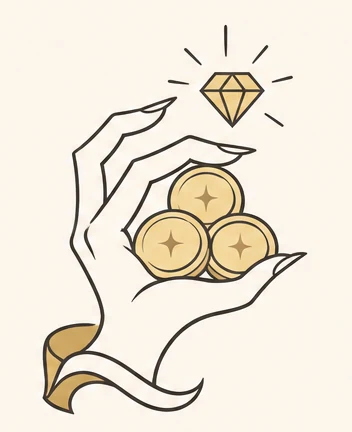
A hand holding coins and reaching toward a diamond

Greed

Shopping for the next upgrade while the last one is still boxed.

Greed is wanting more even when you already have enough. You might buy a spare of something that rarely breaks or hang on to things you could afford to give away. The desire can involve money, belongings, or perks. Traditional accounts describe it as an excessive attachment to possessions. The quiz asks how often that wish to keep or gain more influences small decisions.

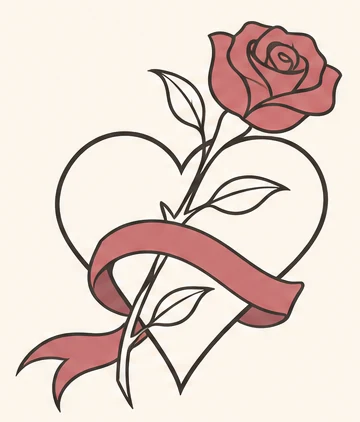
A red rose and ribbon wrapped around a heart

Lust

Losing track of a conversation when someone attractive walks by.

Lust is attraction that takes up more of your attention than you meant to give it. A daydream can keep you half listening to a friend, or a flirtatious chat can take over a break you planned to spend on something else. In traditional accounts, lust refers to excessive sexual desire. In this quiz, the questions focus on how easily desire interrupts what you were doing.

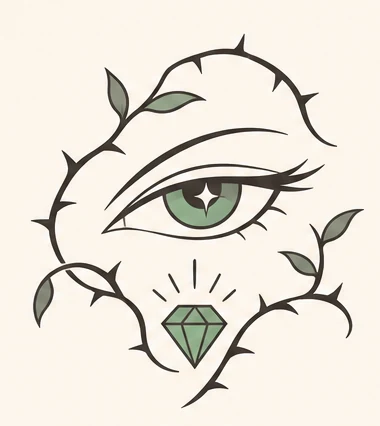
A green eye fixed on a diamond inside a thorny vine

Envy

Feeling deflated when a friend posts about their new job.

Envy is the sting of seeing someone else get something you wanted. A friend’s trip, a coworker’s promotion, or another person's relationship can change how you feel about your own day. You can care about someone and still feel the sting. Traditional accounts describe envy as sadness at another person’s good fortune. The quiz asks how often comparison changes your ability to enjoy something you already have.

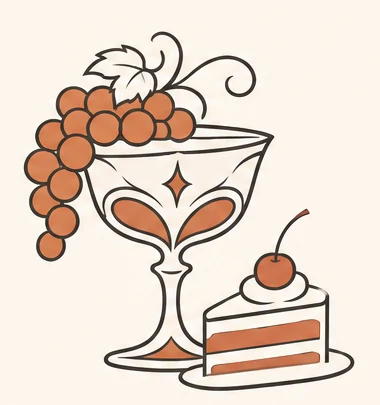
A full goblet beside grapes and a slice of cake

Gluttony

Reaching for more when there’s still food on the table.

Gluttony is finding it hard to stop after you have had enough. You might already be full and still order more, or keep watching videos after you meant to go to bed. Doing it feels good in the moment and can leave you wishing you had stopped earlier. The term traditionally referred to excess in food and drink. Here it also covers familiar habits like scrolling past the point where it is fun.

A clenched fist surrounded by flames

Wrath

Firing back after reading a one-word text.

Wrath is anger that keeps shaping your actions after the moment has passed. You might replay a slow checkout on the way home, then snap at someone who had nothing to do with it. A text can seem harsher each time you reread it. Traditional accounts distinguish anger from the urge to punish or get even. The quiz asks about everyday moments when irritation carries into the next thing you do.

A sleeping crescent moon beside a pillow and a running hourglass

Sloth

Starting another episode with work due tonight.

Sloth is putting off a task or a decision you know deserves your attention. You might answer several easy messages to avoid one tricky email, or wait until a bill is due to open it. Staying busy can make that delay harder to notice. Older accounts also use the word acedia for withdrawal from things that matter. The quiz focuses on the everyday habit of postponing the first step.

Start the test

Who Might Enjoy This Quiz?

This seven deadly sins quiz is a few minutes of self-reflection. If you came here wondering “Which deadly sin am I?”, start by looking at all seven scores and see which examples feel familiar.

Curious about your habits

Maybe you keep checking who saw your post or putting off the one task you meant to finish. The quiz gives you words for habits you already notice, with a result you can come back to later.

Comparing results with friends

Send your result card to a friend or a group chat and invite everyone to take the quiz. Compare which sin came out highest for each person, then trade stories about the questions that made you laugh.

Interested in the seven deadly sins

You might know the list from a book, a show, or a class. Here you can see what those old names look like in ordinary life, from who takes credit for a team win to who keeps scrolling past bedtime.

What Your Scores Mean

Your seven deadly sins test results show how you rated seven groups of statements. A score of 75% for Pride, for example, means the answers in that group added up to 12 of the 16 possible points. In the example here, Pride comes out highest and Wrath comes out lowest.

Start with the strongest score, then look at the entries near it. In this example, Envy and Sloth are five points apart. Changing one answer could flip their order. Reading both explanations can give you more to think about than looking at the top result alone.

Each percentage describes a single attempt. Compare the seven scores within your result, and use the explanations to connect the numbers to situations you recognize.

Start the test

Example result

Pride 75%

Illustrative scores from a sample set of answers.

A crowned mirror reflecting a person’s profile

You might replay a compliment all afternoon or wait for a meeting with your colleagues to turn back toward your best story.

Read more about this result

Pride is the wish to stand above other people and to be seen doing it. On your phone, it might be polishing a post and then checking who noticed. The traditional lists put pride first. A high score suggests that recognition mattered in several of the situations you rated. Think about which kinds of praise stay with you and whose opinion makes the biggest difference.

All seven scores

  • Pride 75%
  • Greed 50%
  • Lust 38%
  • Envy 63%
  • Gluttony 42%
  • Wrath 33%
  • Sloth 58%

Example Questions From the Seven Deadly Sins Test

These are three of the 25 statements in the Seven Deadly Sins test. Each describes an ordinary moment. Open a question to see the five answer choices. When you take the quiz, pick the option that best matches how you usually act. You can go back to change an answer.

I wait until something is almost due before I start.
  • Not like me at all
  • A little like me
  • Somewhat like me
  • A lot like me
  • Exactly like me
When someone praises my work, I replay it in my head for hours.
  • Not like me at all
  • A little like me
  • Somewhat like me
  • A lot like me
  • Exactly like me
I check how much better someone else is doing before I let myself enjoy my own win.
  • Not like me at all
  • A little like me
  • Somewhat like me
  • A lot like me
  • Exactly like me

Start the test

How the Test Works

The Seven Deadly Sins test takes about three minutes, with one answer per statement. Here’s how the questions are grouped, how each percentage is calculated, and how to connect your result to your everyday choices.

Question design

This test has 25 questions. Four themes — pride, greed, lust, and envy — have four questions each. The other three — gluttony, wrath, and sloth — have three questions each. The items are mixed so that the same theme does not appear in a block, and you are not told which sin a question belongs to while you answer.

Every question uses the same five-point scale: "Not like me at all" (0), "A little like me" (1), "Somewhat like me" (2), "A lot like me" (3), and "Exactly like me" (4). You choose one answer per question, and you can go back to the previous question if you change your mind.

How scores are calculated

For each sin, we add up your points and divide by the maximum that sin could have scored — that is, the number of questions for that sin times four. We then multiply by 100 and round to the nearest whole number. The result is a percentage from 0 to 100 for every sin, shown together on the result screen.

When at least one score is above zero, the highest percentage is your strongest sin for this attempt. If every score is 0%, your result shows all seven zeros. If two or more sins are tied, we first look at which of those sins had the single highest question score. If that is still tied, we use a fixed order: pride, greed, lust, envy, gluttony, wrath, then sloth. A percentage is not a diagnosis and it is not a claim that you "are" that sin. It only reflects how often you recognized yourself in that theme's questions today.

What a result can tell you

The seven deadly sins are old names, but the situations are ordinary. At work, pride can be the need to have the last edit; wrath, the message you take as a slight; sloth, the task you postpone until Friday at 4:30. Among friends, envy can quietly ruin an evening when someone else has news, and greed can be the inability to celebrate a win without asking what it paid. On a phone, gluttony is the feed you keep refreshing after you meant to sleep, and lust is the attractive stranger, photo, or chat that steals a commute. These are Tuesday patterns, not proof of a type — which is why a list this old still has useful language worth borrowing.


Frequently asked questions

What are the seven deadly sins?

The seven deadly sins are pride, greed, lust, envy, gluttony, wrath, and sloth. See what each one means.

Is this seven deadly sins test accurate?

This test has 25 questions, with three or four items for each of the seven sins. Your result is a self-reported tendency, not a psychometric measurement. It is here for entertainment and self-reflection, not as a clinical or moral assessment.

Which seven deadly sin am I?

Finish all 25 questions and you will get a percentage for each of the seven sins. When at least one score is above zero, your result highlights the strongest sin. Start the test

Is the test free, and do I need an account?

Yes. The test is free, and you can see your result without an account. Your answers stay in your browser. Sharing is optional.

Can I retake it?

Yes. You can retake the test whenever you like. Your result may change from one attempt to the next, and comparing notes with a friend is often more interesting than treating a single score as final.

Browse quizzes